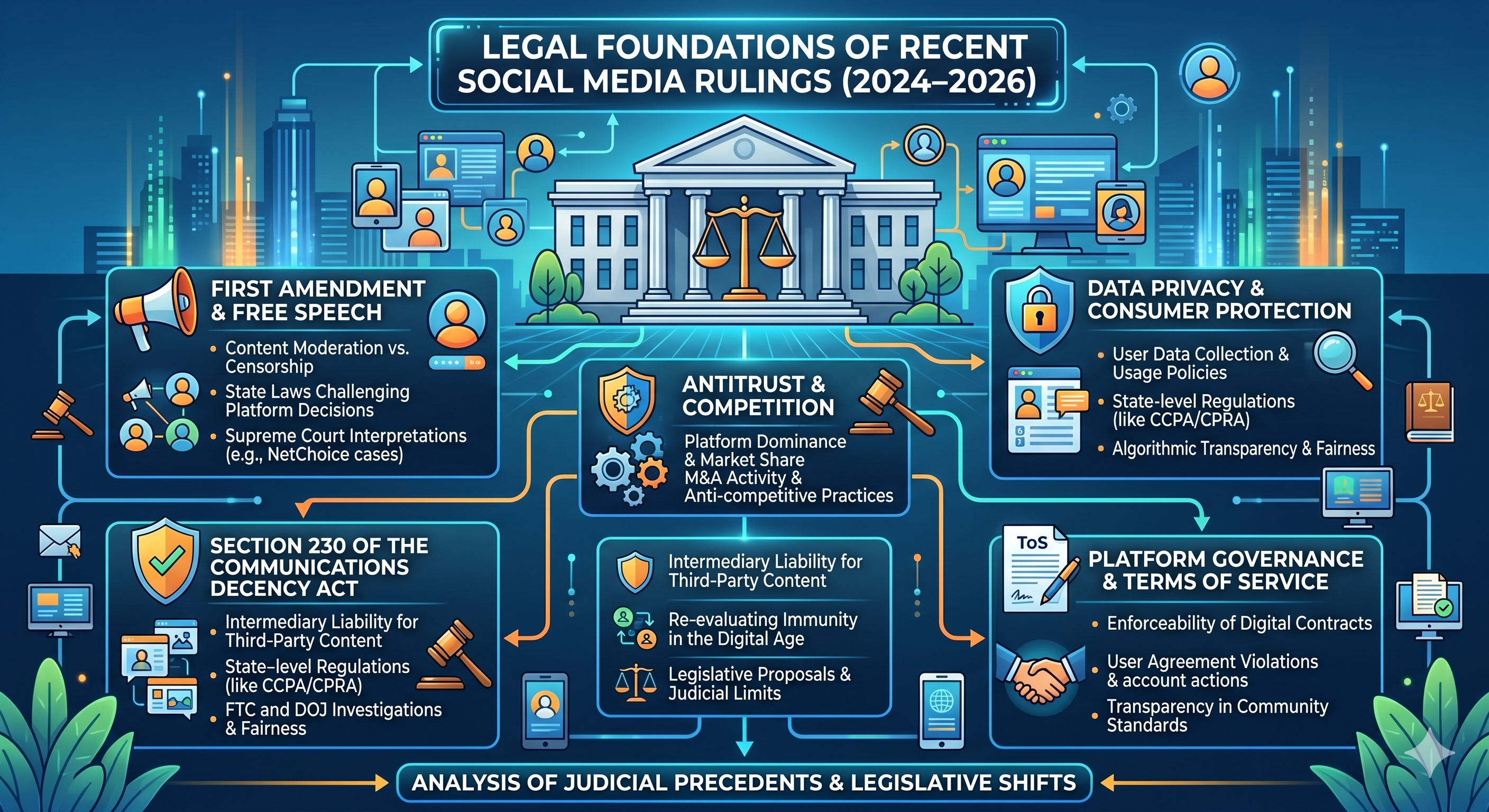
Legal Foundations of Recent Social Media Rulings (2024–2026)
1. Product Liability: The Design Defect Theory
In the landmark K.G.M. v. Meta & Google (March 2026), a Los Angeles jury found the companies liable based on the intentional design of their software rather than the content hosted on it.
Design Defect: Plaintiffs successfully argued that specific features were engineered to bypass the neurobiological defenses of minors.
Addictive Mechanisms: Features such as infinite scroll, auto-play, and intermittent variable rewards (similar to slot machines) were identified as defective components.
The Verdict: The jury determined the risks of addiction and mental health distress outweighed the benefits of the design, and that companies failed their duty to warn users of these inherent risks.
2. Consumer Protection: Deceptive Trade Practices
State-level consumer protection laws have been utilised to bypass federal immunity under Section 230.
Unfair Trade Practices: In rulings such as New Mexico v. Meta (2024), the legal basis rested on the misrepresentation of platform safety.
Misleading Conduct: Courts found that companies actively misrepresented the efficacy of their safety tools and child-protection algorithms while internal documentation suggested they were aware of the risks to younger demographics.
3. Statutory Duty of Care and Regulatory Compliance
International jurisdictions have moved toward specific statutory obligations that place the burden of proof on the platforms.
Digital Services Act (DSA): In 2026, the European Commission pursued Meta for failing to implement mandatory age-verification measures.
Social Media Minimum Age (SMMA): In Australia, legislation enacted in late 2025 created a statutory obligation for platforms to take "reasonable steps" to block users under 16, providing a clear legal basis for recent enforcement actions.
Summary of Legal Theories
| Legal Basis | Primary Argument | Key Example |
|---|---|---|
| Negligent Design | Platforms are "defective products" designed to cause addiction. | K.G.M. v. Meta & YouTube (2026) |
| Consumer Fraud | Companies provided deceptive information regarding platform safety. | New Mexico v. Meta (2024) |
| Regulatory Breach | Failure to comply with specific age and safety regulations. | EU Digital Services Act / Australian SMMA |
These rulings represent a "Big Tobacco" moment for the tech industry, shifting focus from user behaviour to the internal knowledge and manipulation strategies used by the corporations themselves.